
Picture this: Can you navigate public transport Asia like local? You just landed in Hanoi. The air is thick, the humidity hits you like a wall, and the sound of a thousand motorbike engines is deafening. You need to get to your hostel in the Old Quarter. Do you take an overpriced airport taxi, or do you dive headfirst into the beautiful, chaotic ecosystem of local transport?
If you are on an Overland Budget Trip through Asia, learning to master public transit isn’t just about saving money (though you will save a ton). It’s about peeling back the tourist layer and experiencing the city’s actual pulse. It’s where you meet locals, see the real neighborhoods, and get the best stories.
But let’s be honest, it can be intimidating. Here is your survival guide to navigating the metros, tuk-tuks, and “chicken buses” of Asia without losing your cool (or your wallet).
The Golden Rule: Embrace the Controlled Chaos
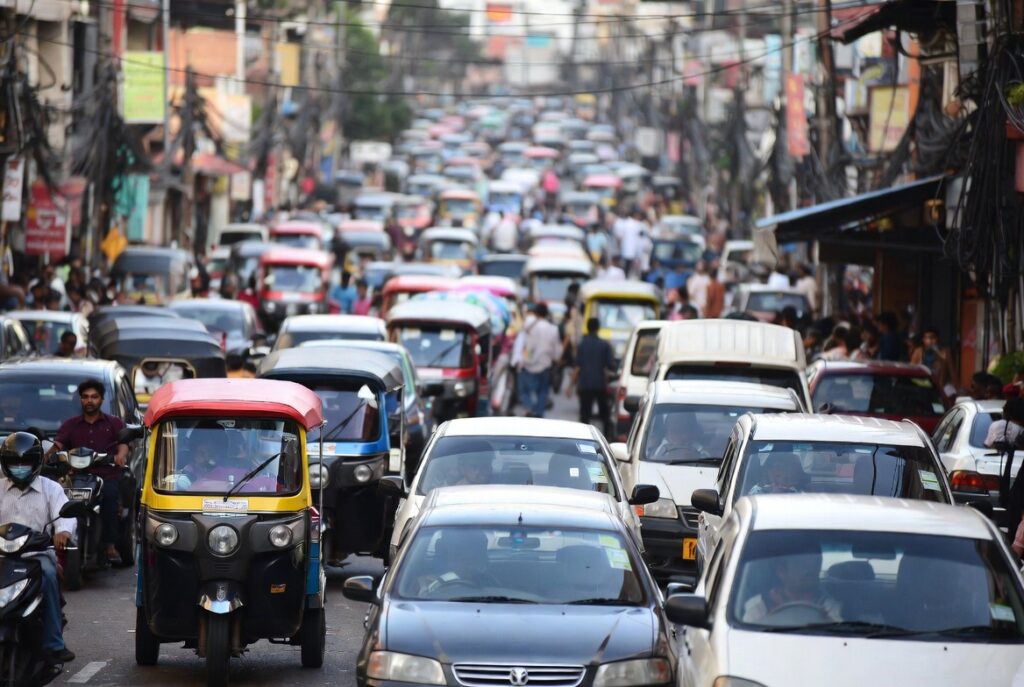
The first step is a mindset shift. In the West, transport is about efficiency and schedules. In many parts of Asia, it’s about flow and negotiation.
Forget the timetable. The bus leaves when it’s full. The red light is sometimes just a suggestion. The “sidewalk” is often an extra lane for motorbikes.
Don’t fight it. If you approach a Bangkok tuk-tuk driver with rigid expectations, you will get frustrated. If you approach it with a smile, a sense of humor, and a willingness to haggle, you’ll have a great time. Expect delays, expect to be crammed in tight, and expect the unexpected.
Mastering the Modes of Transport
Asia’s transport network is a multi-layered beast. Here is how to tame each one.
1. The Three-Wheeled Icons (Tuk-tuks, Autorickshaws, Bajs)
They are iconic, fun, and the easiest way to get ripped off as a rookie. They are best for short distances where a taxi is too much hassle.
-
The Rule of Negotiation: Never, ever get in without agreeing on a price first.
-
How to Haggle: The driver will quote you a “tourist price” (usually 3x the normal rate). Laugh politely, and counter with 50% of their offer. You will eventually meet somewhere in the middle.
-
The “Scam” Warning: If a driver offers you an incredibly cheap ride (like 20 baht for a tour of Bangkok), they are going to take you to a suit shop or gem store where they get a commission. Politely decline and find another driver.
2. The Local Bus (The Budget King)
This is the final boss of budget travel. Whether it’s a sleek AC bus in Singapore or a crowded “chicken bus” in Laos with actual livestock on the roof, this is the cheapest way to move.
-
The Secret Weapon: Google Maps is shockingly good for local bus routes in major cities like Seoul, Taipei, and Bangkok. It will tell you the bus number, the stop, and sometimes even live arrival times.
-
The “Conductor” System: In Southeast Asia, you rarely pay the driver. You get on, sit down, and a conductor will squeeze through the aisle rattling coins to collect your fare. Have small bills ready.
-
Keep Your Gear Close: Local buses get packed. Keep your daypack on your lap, not in the overhead bin or under the seat behind you. This is a prime spot for pickpockets. Need a secure daypack? Check out my One-Bag Gear Guide.
3. The Ride-Sharing Revolutions (Grab & Gojek)
Uber failed in Southeast Asia because locals did it better. Grab (operating in Thailand, Vietnam, Malaysia, etc.) and Gojek (Indonesia) are essential apps.
-
Why It’s Great: No haggling. The price is fixed in the app. It overcomes the language barrier because you set the destination on a map.
-
Motorbike Taxis: The real magic is the motorbike taxi option (GrabBike / GoRide). It’s half the price of a car and weaves through gridlock traffic much faster. Hang on tight!
4. Metros & Skytrains (The Modern Lifeline)
Cities like Tokyo, Seoul, Singapore, Kuala Lumpur, and Bangkok have world-class metro systems that are clean, efficient, and easy to use.
-
Get the Card: Don’t buy single-journey tokens every time. Buy the rechargeable smart card (Suica in Tokyo, EZ-Link in Singapore, Rabbit in Bangkok). It saves time and is often slightly cheaper per ride.
-
Mind the Gap & The Etiquette: These systems are dead silent. Talking loudly on your phone on a Tokyo subway is a major faux pas. Follow the arrows on the floor for queuing.
Essential Apps for Your Digital Toolkit
Don’t leave your hostel Wi-Fi without these loaded on your phone.
-
Grab / Gojek: For reliable, fixed-price rides.
-
Google Maps: Download the city map for offline use. This is crucial when you don’t have data and need to track your location on a bus.
-
XE Currency: Know the real exchange rate before you start negotiating with a tuk-tuk driver so you know if you’re arguing over $1 or $10.
Practical Tips for Smooth Sailing
-
Carry Small Change: A bus conductor on a rural route will not have change for a massive bill you just got from the ATM. Hoard your small coins and notes.
-
Have the Address in the Local Language: Show the taxi driver the address in Vietnamese/Thai/Japanese on your phone. Do not rely on your pronunciation of “Wat Phra That Doi Suthep.”
-
Safety First: In crowded trains or buses, wear your backpack on your front. It looks dorky, but it’s the universal sign of a savvy traveler protecting their stuff.
The Bottom Line
The first time you successfully navigate a complex series of local buses to a hidden temple, you will feel a sense of accomplishment that no organized tour can provide. You stop being a passive tourist and become an active participant in the city.
So take a deep breath, smile, and jump on that bus. You’ll get there eventually, and the ride will be an adventure in itself.
What’s your wildest public transport story from traveling? Did you end up sharing a seat with a chicken? Tell me in the comments below!
Leave a Reply